


|
|
|
|
by Editor Miro Susta (mirosu)
Edited and published by Yvette Depaepe, the 15th of December 2025
This article is part four of a five parts series on Olympic and non-Olympic sports.
The previous articles can be found under the following links:
Summer Olympic Sports-Part 1
Summer Olympic Sports-Part 2
Non-Olympic Sports Part 1 - Summer Outdoor Sports
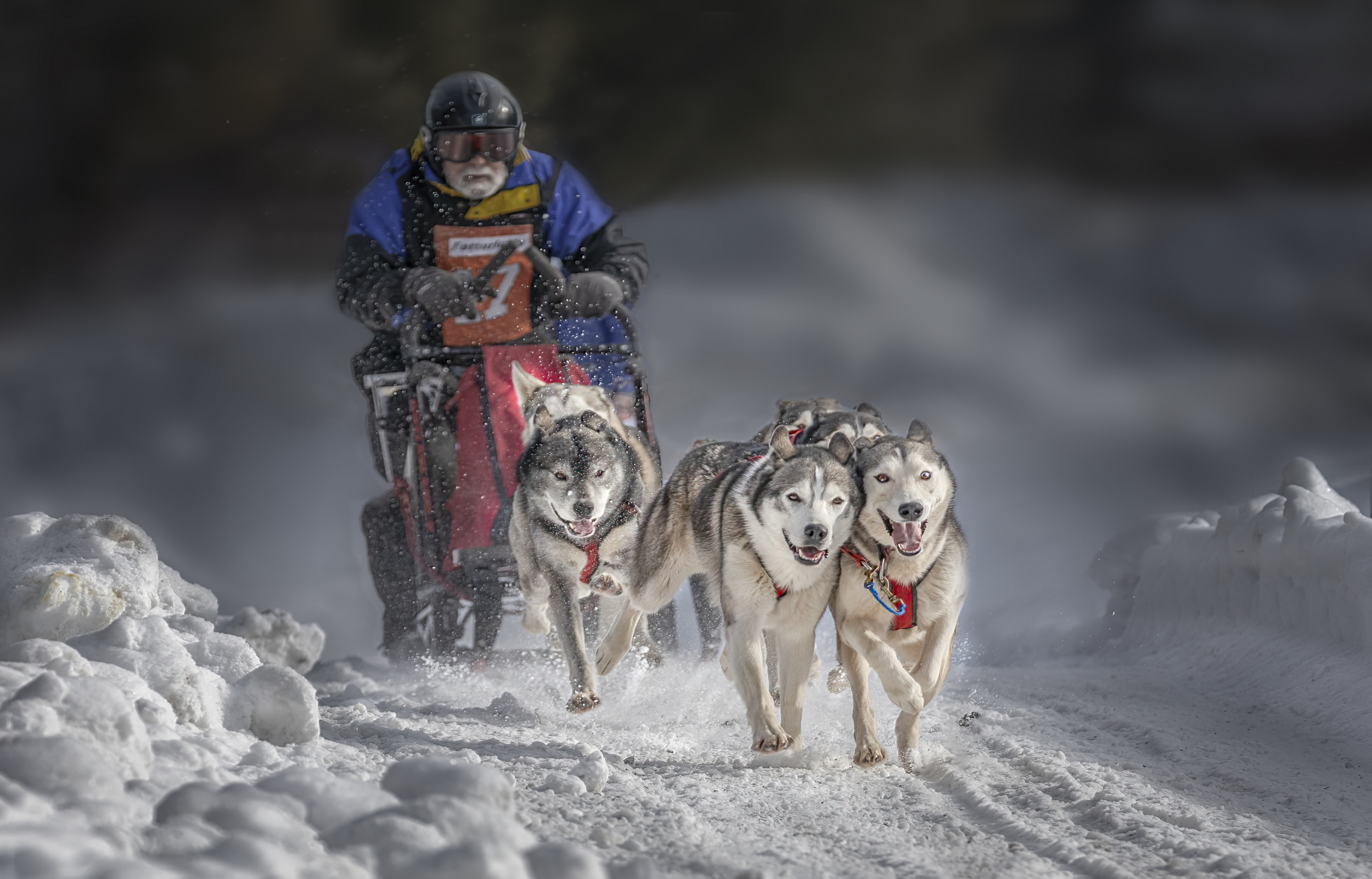
'Best Team Member' by Molly Fu APA
In previous articles, I haven't explained why I write about sports. The simple answer is that I have been closely involved with both sports and photography throughout my life. In my early years, I was a high-performance athlete who competed in 800- and 1,500-metre races. I then became an ice hockey player in a Swiss club, followed by a passionate alpine and cross-country skier and finally an active golfer. I combined my two passions, working mainly as a photographer at professional golf competitions for Swiss and German golf magazines.
In this article, I am focusing on non-Olympic winter and non-Olympic indoor sports. All photos originate from 1x Photo Gallery.
WINTER SPORTS
Long distance extreme ski races…
... they are very hard and incredibly challenging, but for many, they are also the most spectacular cross-country skiing races.
At 220 kilometres, Nordenskiöldsloppet is the world's longest cross-country skiing race. It takes you through the forests and frozen lakes of Swedish Lapland. The course, which is located north of the Arctic Circle, involves ascending and descending a total of about 1,500 metres.
The Arctic Circle Race in Greenland is also designed for hardcore cross-country skiers. With temperatures sometimes dropping to minus 20 degrees Celsius, icy winds, challenging climbs and rapid descents, the technical demands on participants are high. The race covers a total distance of 160 kilometres, with two overnight stays in unheated bivouac tents.
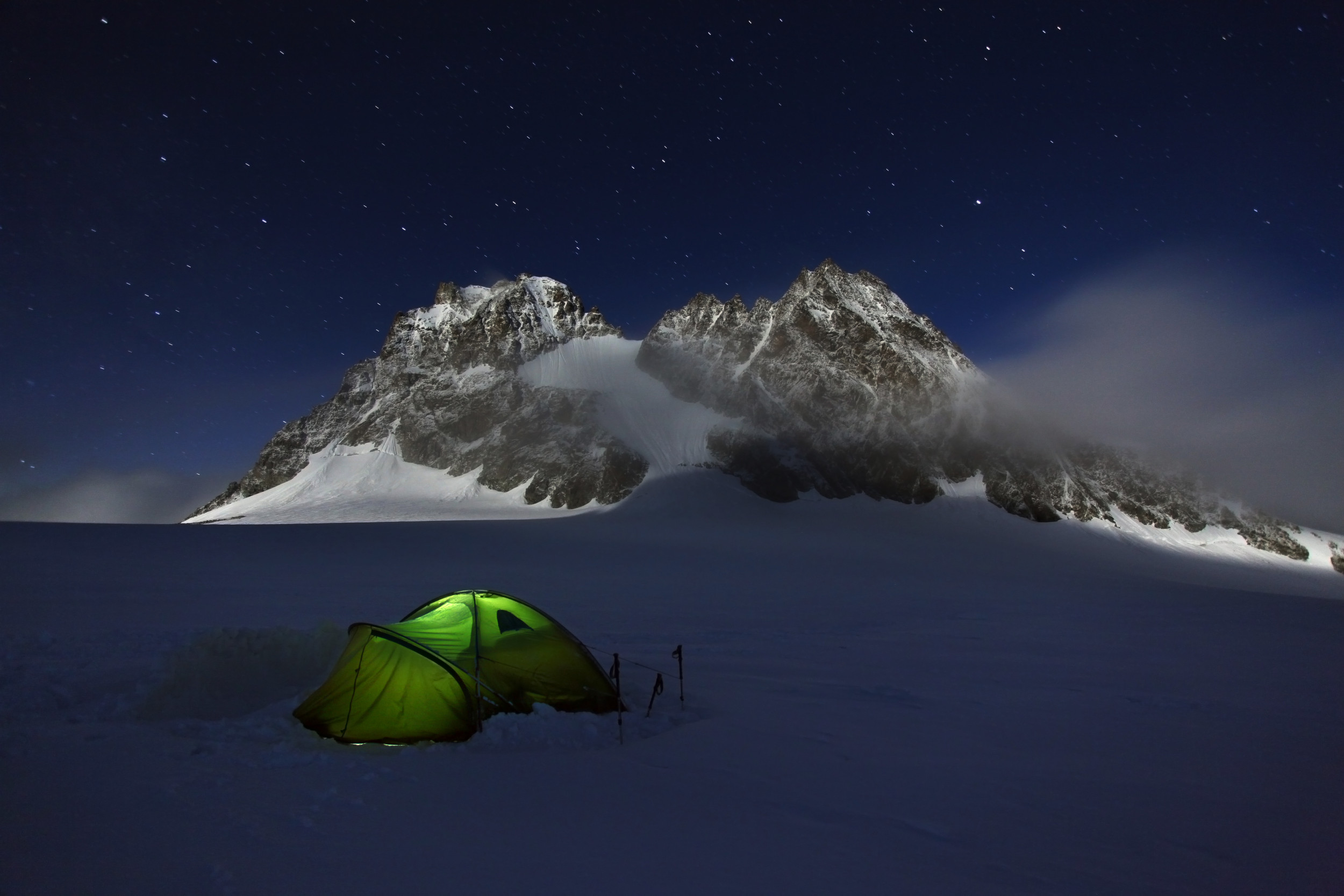
‘Bivouac at Bouquetins’ by Karol Nienartowicz
Extreme downhill skiing…
… refers to long, challenging courses such as the Inferno, the world's oldest and longest amateur downhill ski race, which takes place every January in the Swiss winter resort of Mürren. The course is 14.9 km long and involves a 1,990-metre vertical drop.
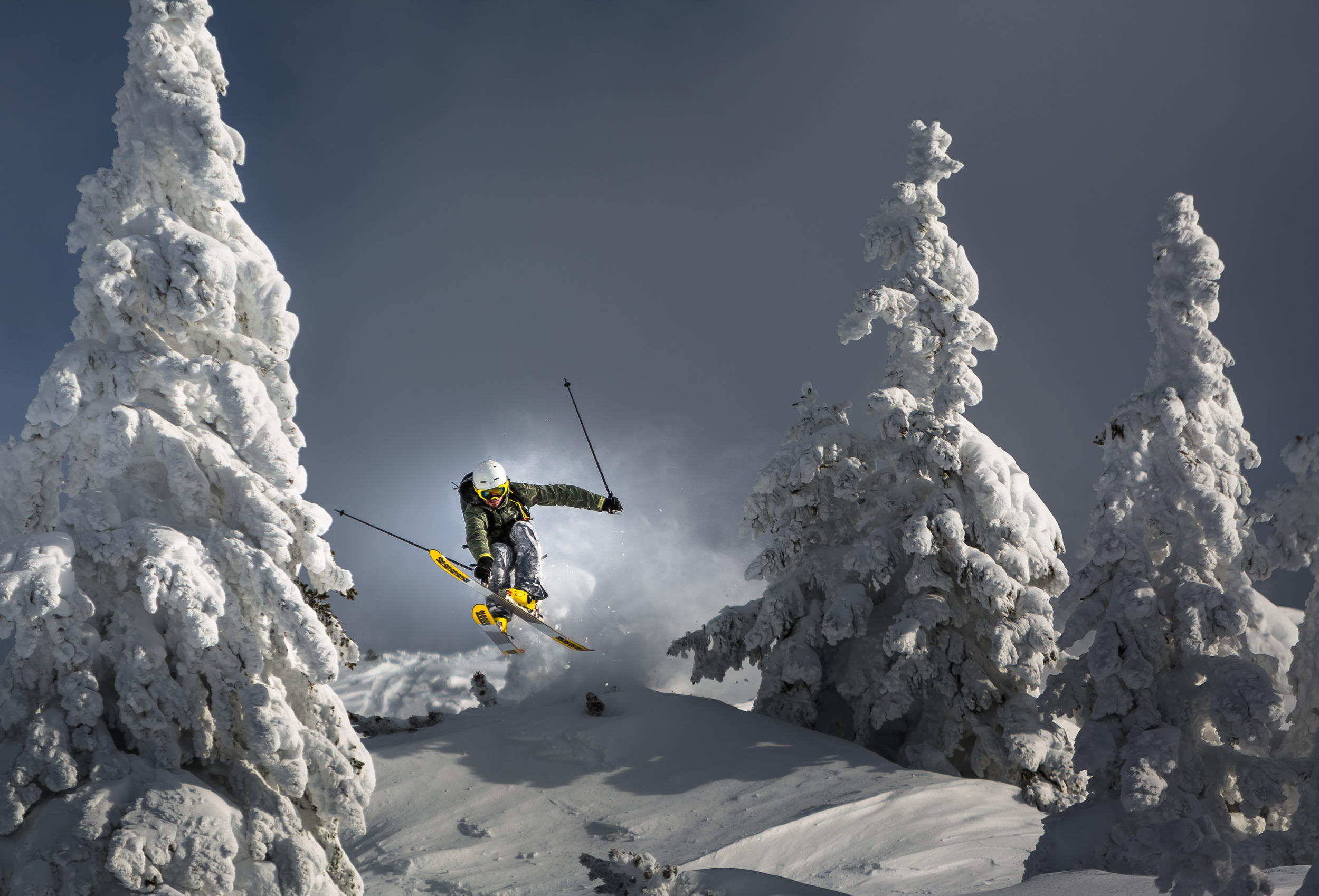
‘Ski is life’ by Sandi Bertoncelj
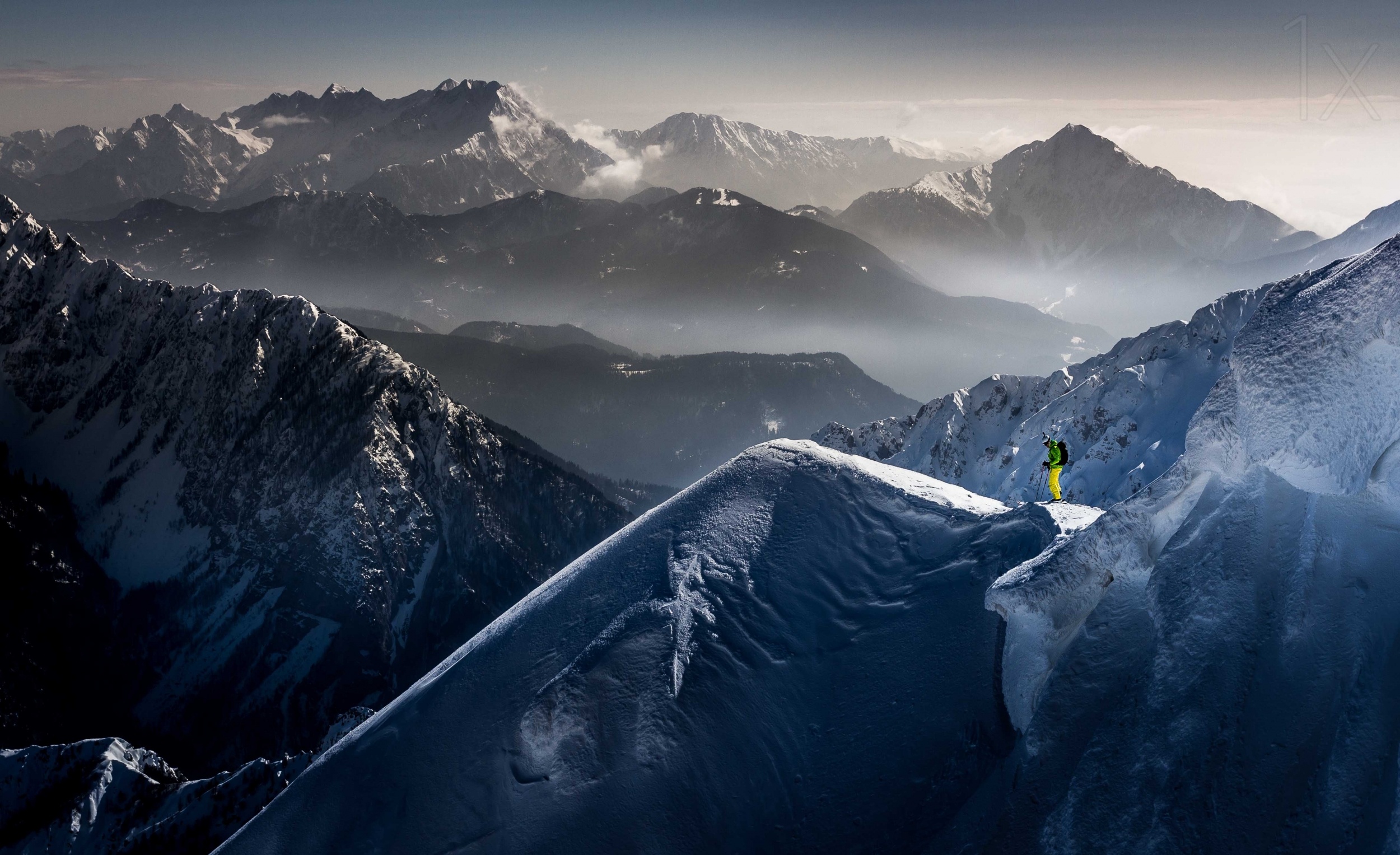
‘Silent Moments before Descent’ by Sandi Bertoncelj
Freeride skiing, hiking and racing…
… combines elements of traditional racing with freeride skiing. Athletes ski on natural, ungroomed terrain and are judged on line choice, fluidity, control, jumps and time. While the hardest ski freeride competition is subjective, the Freeride World Tour (FWT) is widely regarded as the world's premier event, with its finals held at the legendary Xtreme Verbier in Switzerland.
Verbier’s Bec des Rosses is synonymous with extreme freeriding. At 3,223 metres high with a 600-metre vertical drop and 43-degree slopes, it is the steepest and most complex terrain on the FWT circuit. Riders must navigate a maze of narrow couloirs, exposed ridges and huge cliffs, selecting lines that blend technical precision with progressive freestyle moves.
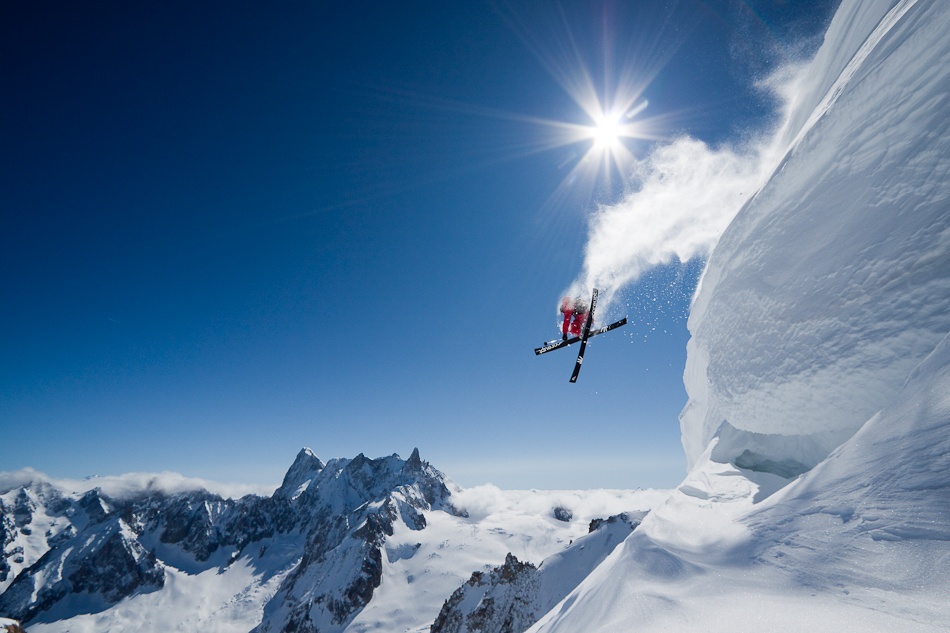
‘Higher’ by Tristan Shu
The Red Bull Oslavia Hike & Ride is an annual freeride skiing competition in Romania that combines hiking up a mountain and skiing down it.
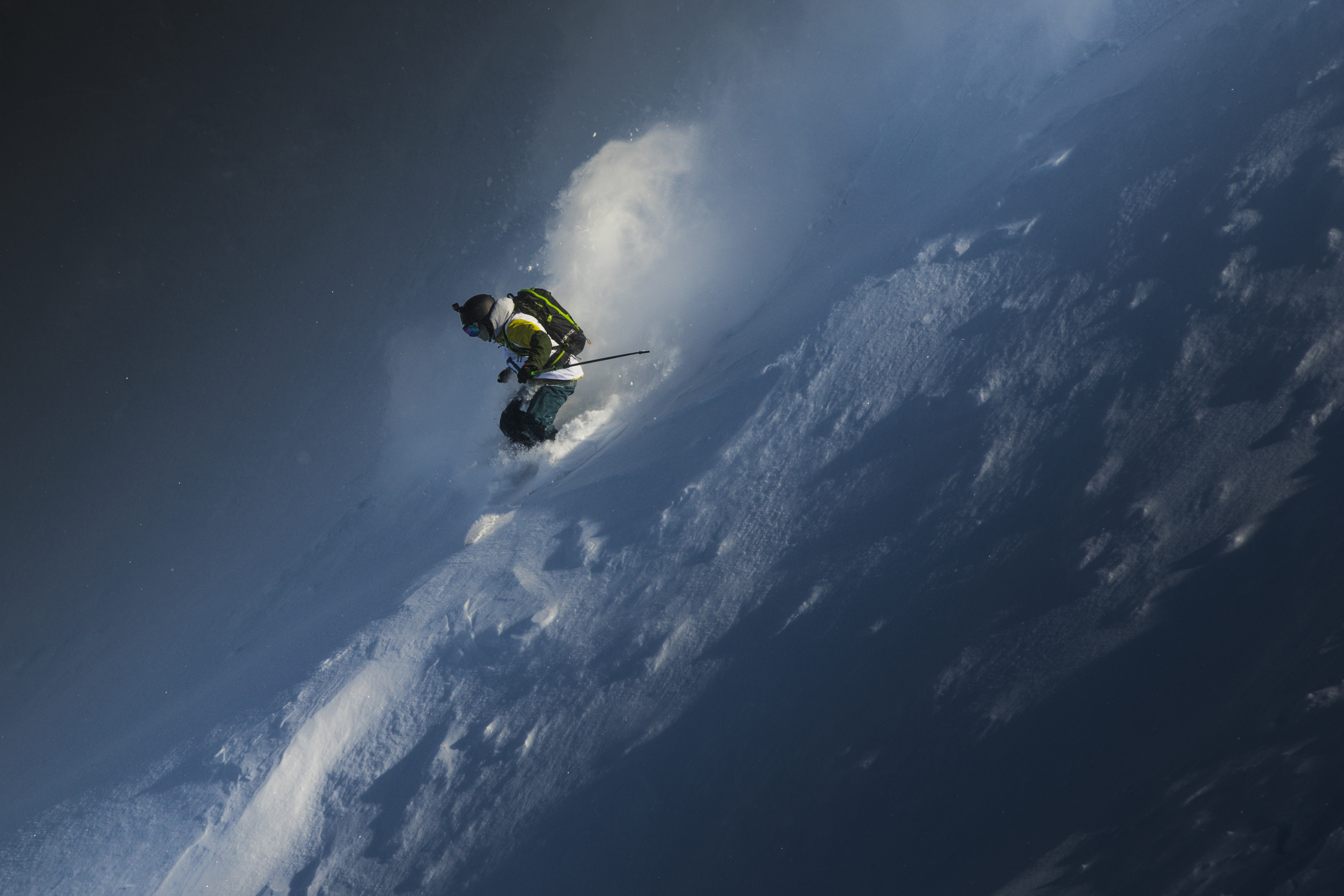
‘Red Bull OSlea Hiride 2019’ by ATTILA SZABO
Speed skiing...
… considered a simple yet dangerous sport, it involves individual racers in aerodynamic suits speeding down steep slopes and pushing the speedometer to its limits. In 2016, world records were set for both men and women, with speeds exceeding 240 km/h (the current men's world record stands at 255.5 km/h). Speed skiing continues to attract passionate and dedicated adventurers to the annual World Cup.
However, the speed skiing competition was tragically overshadowed by the fatal training accident of Nicolas Bochatay at the 1992 Albertville Olympics, and the IOC has not considered it since.
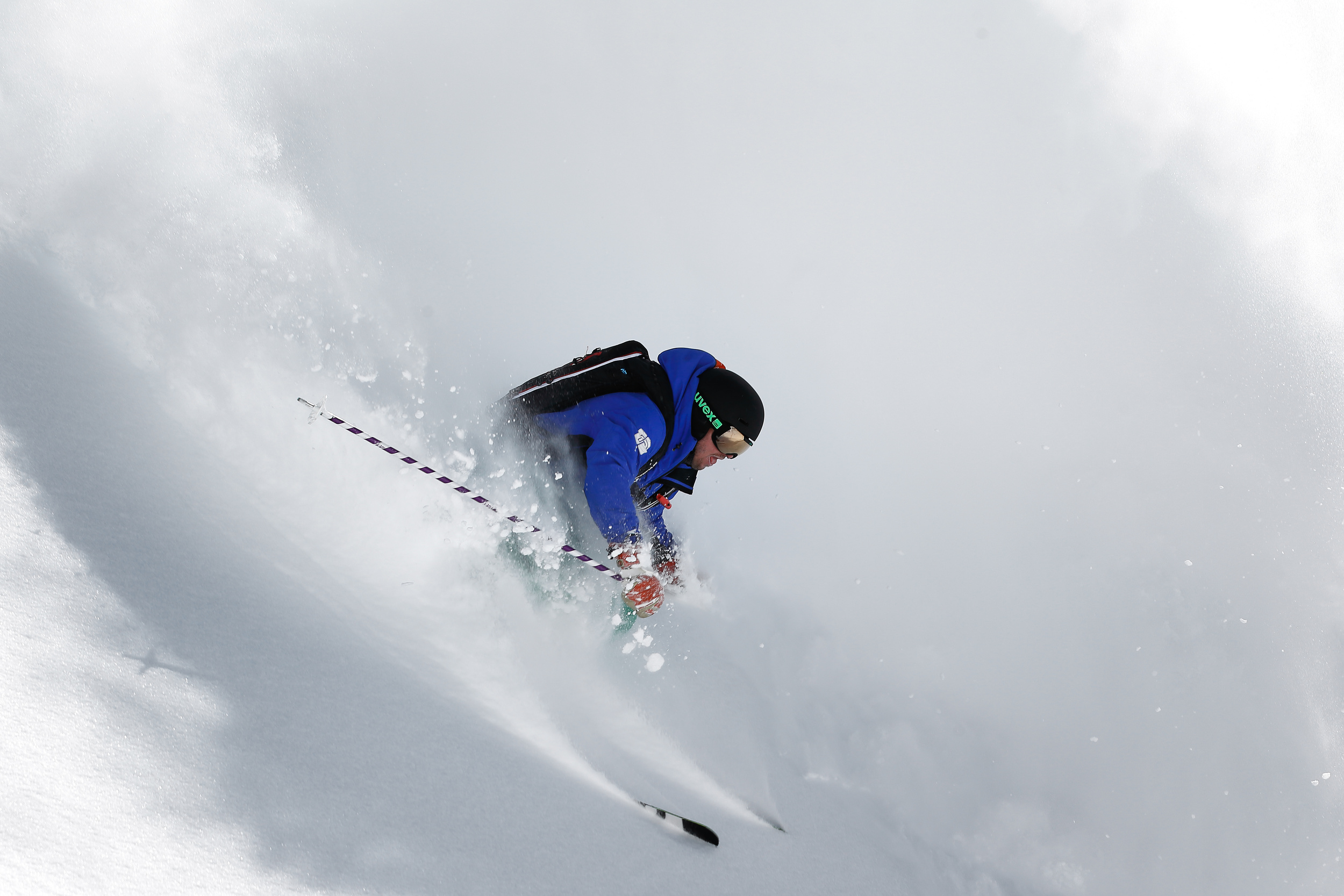
‘One of those days’ by Jakob Sanne
Ski mountaineering…
… competitive ski mountaineering (Skimo) originated in Switzerland, evolving from the military team competition of the Patrouille des Glaciers ski mountaineering race. This race, which takes place from Zermatt to Verbier, was first held in 1943 and has grown in popularity over time. Military patrols competed against each other to complete a specified mountain route on skis as quickly as possible. In fact, the patrol was even part of the 1924 Olympic Games in Chamonix.
This sport's roots go back to the early days of alpine skiing, when it was common practice to make the ascent under your own steam in the absence of ski lifts or cable cars.
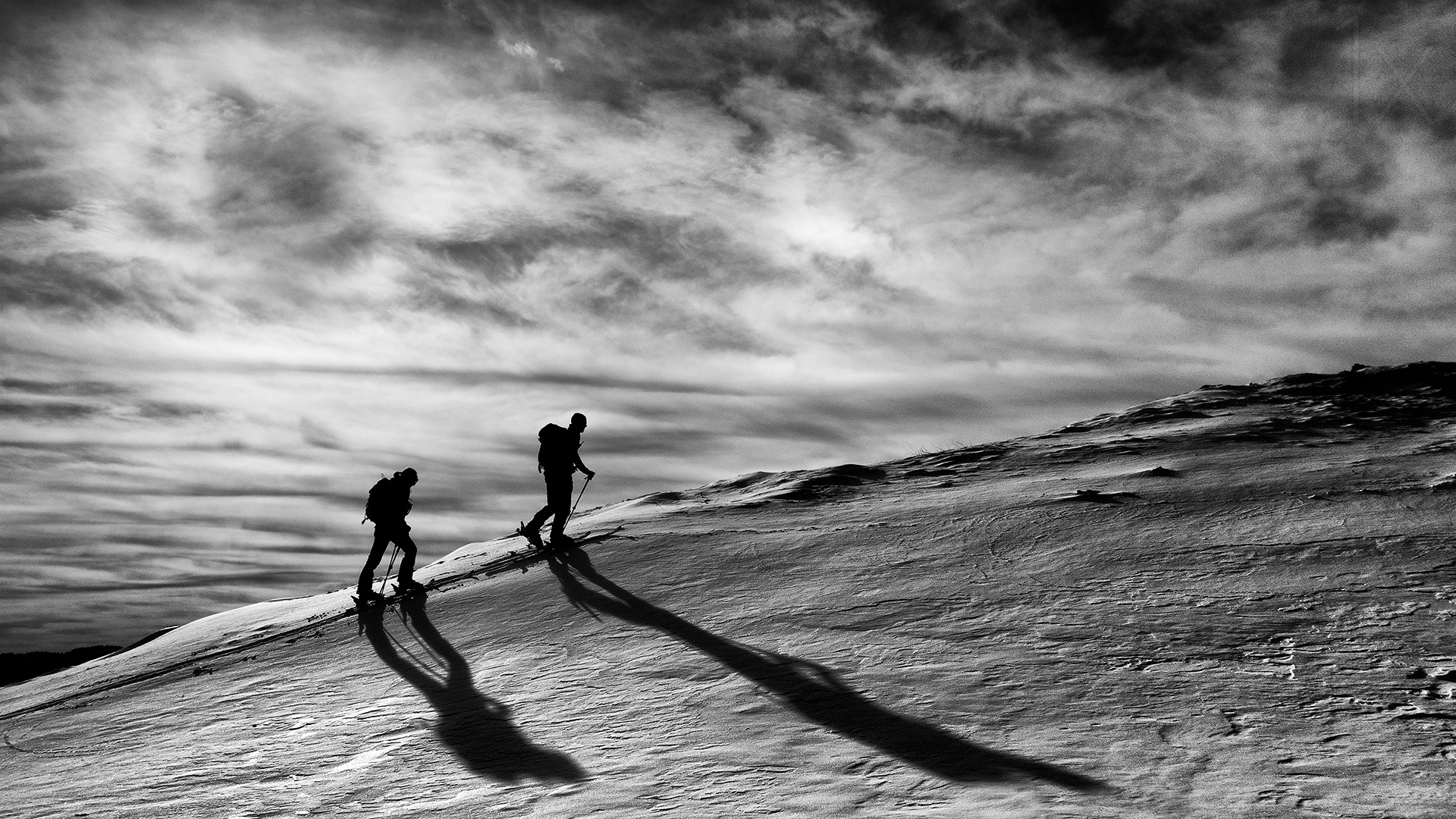
‘Step by step’ by Marcel Rebro
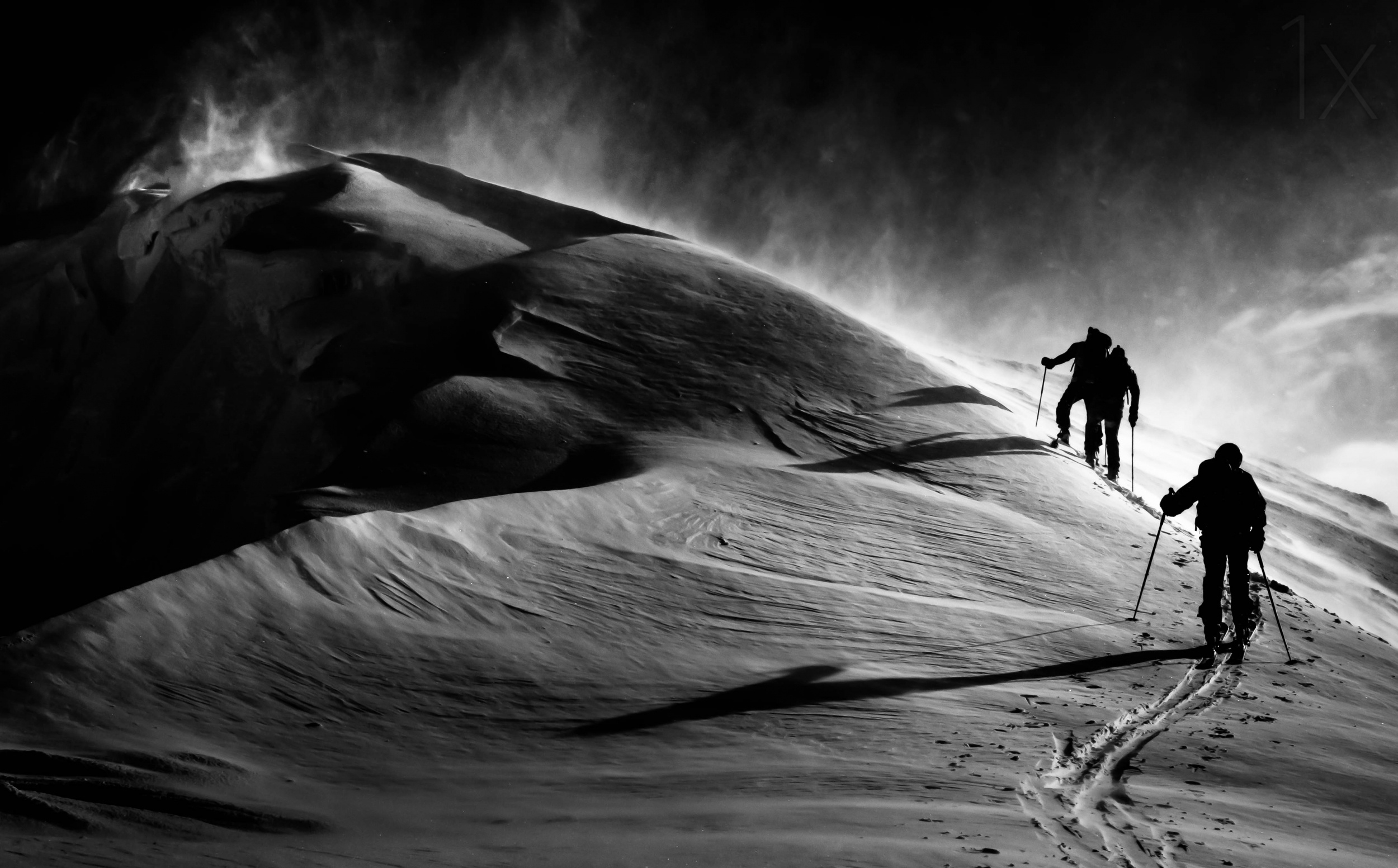
‘Windy mountain’ by Sandi Bertoncelj
Winter Horse Racing…
…which takes place in the Chinese town of Kanas during the traditional yearly Ice and Snow Festival. The races are sometimes held in extremely cold temperatures and feature performances and events such as chases, as well as traditional competitions.
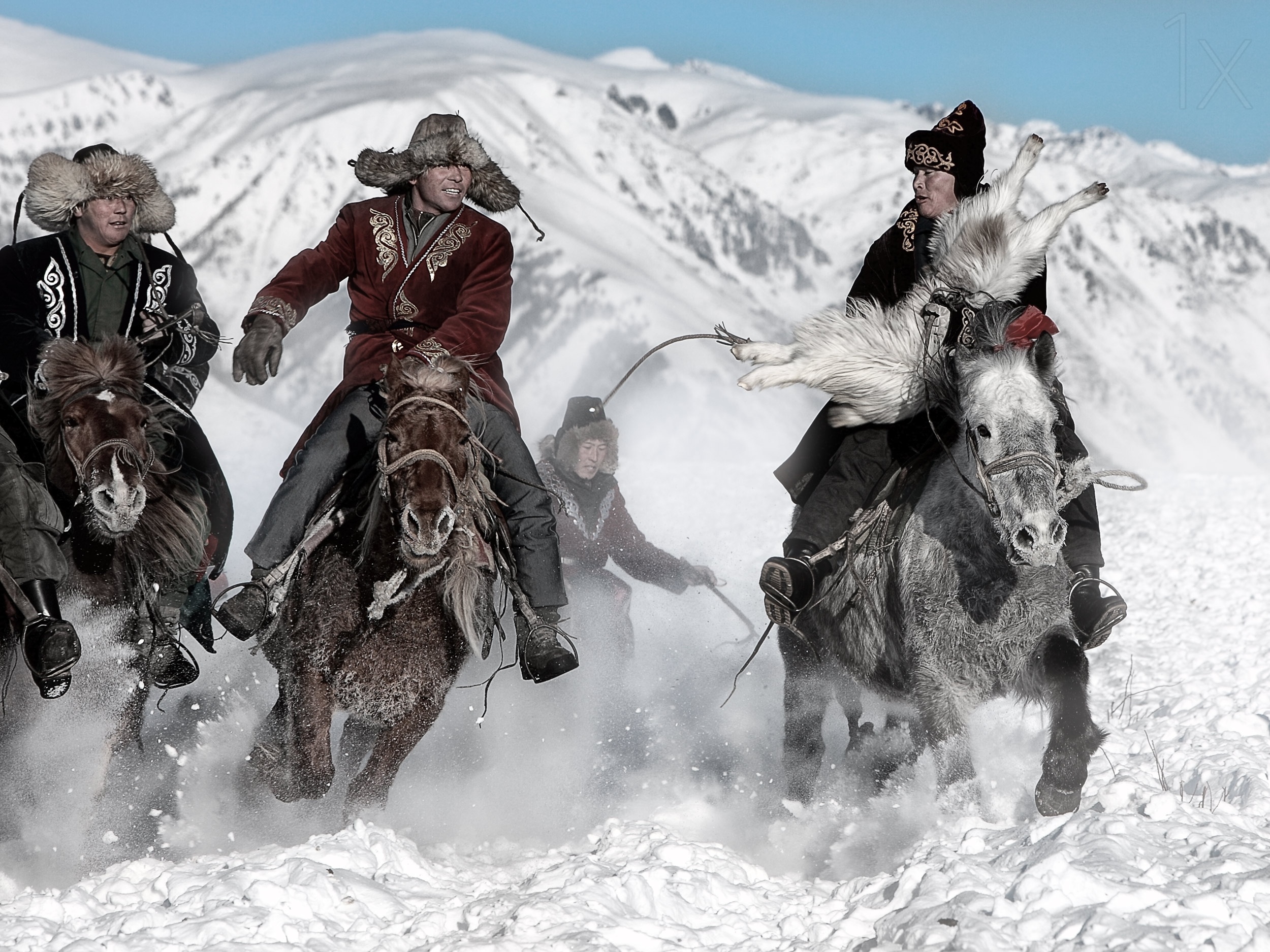
‘Winter Horse Race’ by BJ Yang
Sled dog racing...
... is a winter sport that is particularly popular in the Arctic regions of the United States (Alaska), Canada, Russia, Greenland, Norway, Finland and Sweden. It involves teams of sled dogs pulling a sled with the driver, or 'musher', standing on the runners in a timed competition.
Sprint races cover relatively short distances of generally up to 30 miles per day, mid-distance races cover 30 to 300 miles in total, and long-distance races cover between 300 and 1,000 miles.
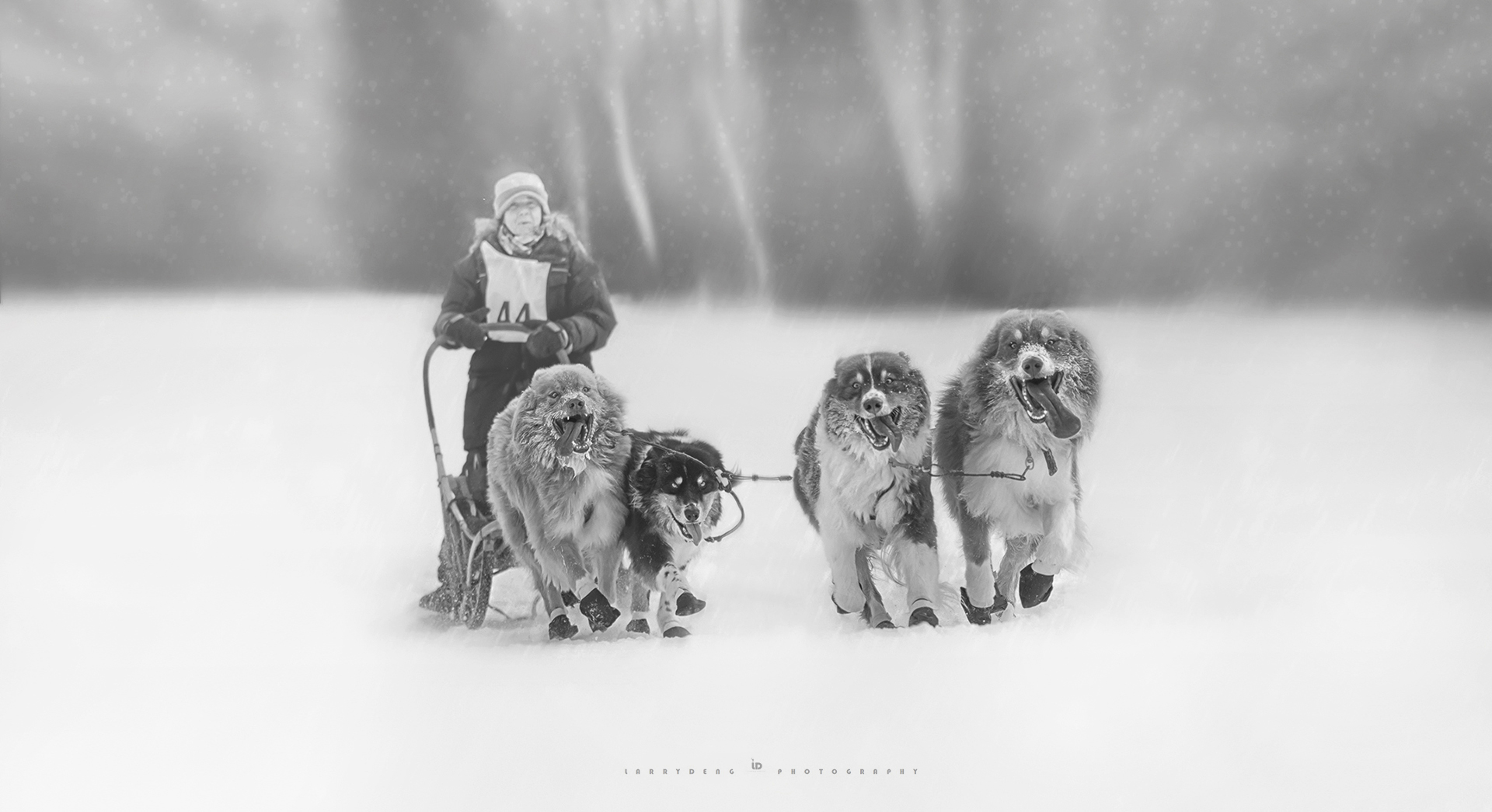
‘A snowy day’ by Larry Deng APA
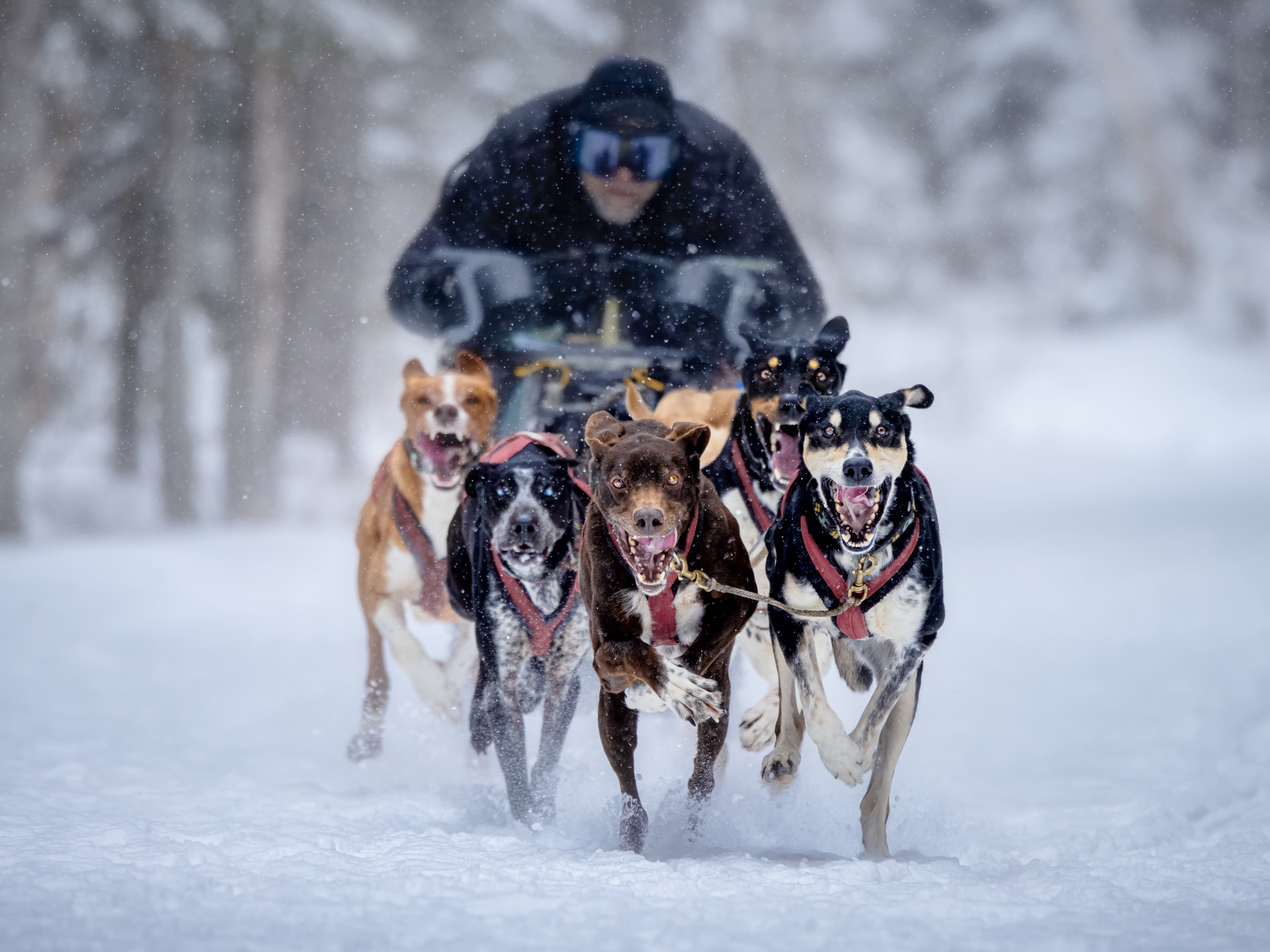
‘Running as One’ by Steven Zhou
Reindeer races…
… are colourful and speedy competitions that form an essential part of northern reindeer culture. They have been held in Finland's Lapland since 1932 and remain a popular winter sport there. Today, reindeer races are also organised and regulated in Norway, the USA (Alaska) and Russia.
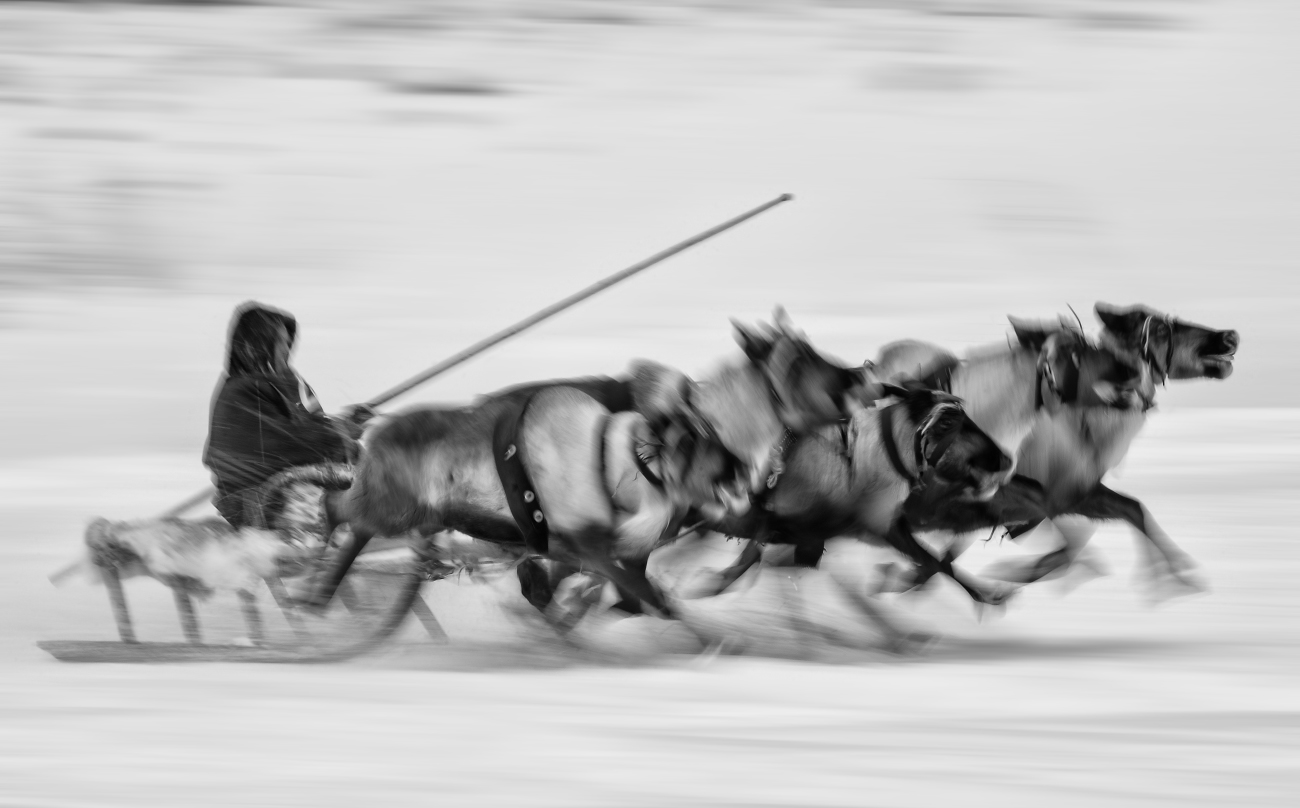
‘Faster than wind’ by Andrey Snegirev
The White Turf…
… takes place in St. Moritz, Switzerland, and is one of the most famous horse races in the world. For 117 years, the frozen Lake St. Moritz has served as a racecourse and the social hub of the Engadin Valley, one of the highest inhabited valleys in Europe at over 2,000 metres above sea level. The White Turf is a unique spectacle where horses and jockeys compete not on sand or grass as usual, but on the frozen surface of Lake St. Moritz. For over a century, this traditional horse race has offered a unique experience in the snow over three weekends in February each year.
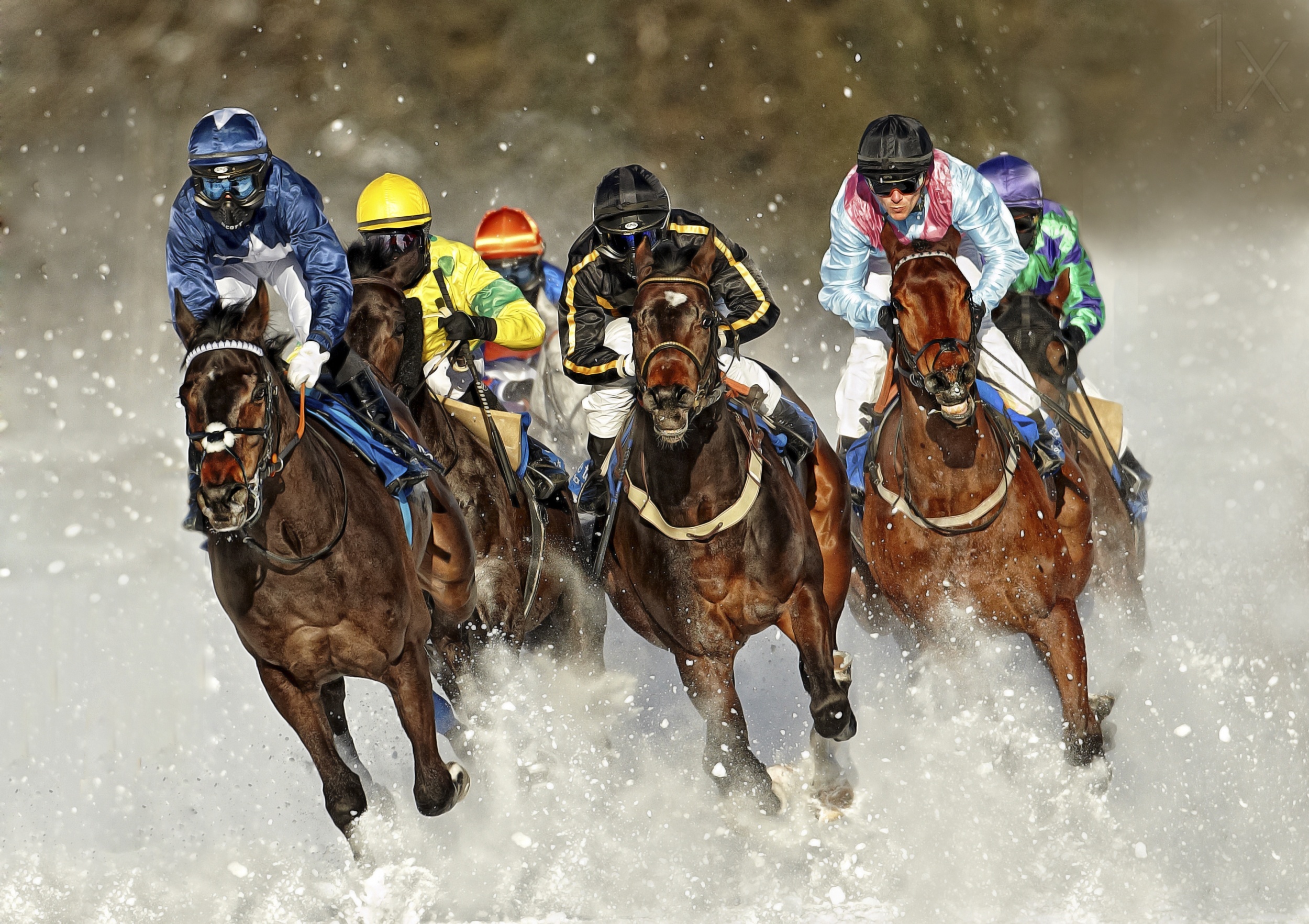
‘White Turf’ by Ludwig Loch
Winter car rallies…
… are competitions in which drivers race on modified tracks or off-road using special techniques adapted for slippery surfaces. These events take place during the winter months and are primarily designed for 4x4 vehicles. Competitors must master challenging conditions such as driving on snow and ice, using techniques such as smooth braking to grip and control the vehicle. The most famous winter rally is the Rallye Monte Carlo, a modern version of the original 1,070 km Paris-Monte Carlo rally launched in 1911. Held every January, it consists of 14 to 22 stages (300 to 600 km) on challenging winter roads in the French and Italian Alps.
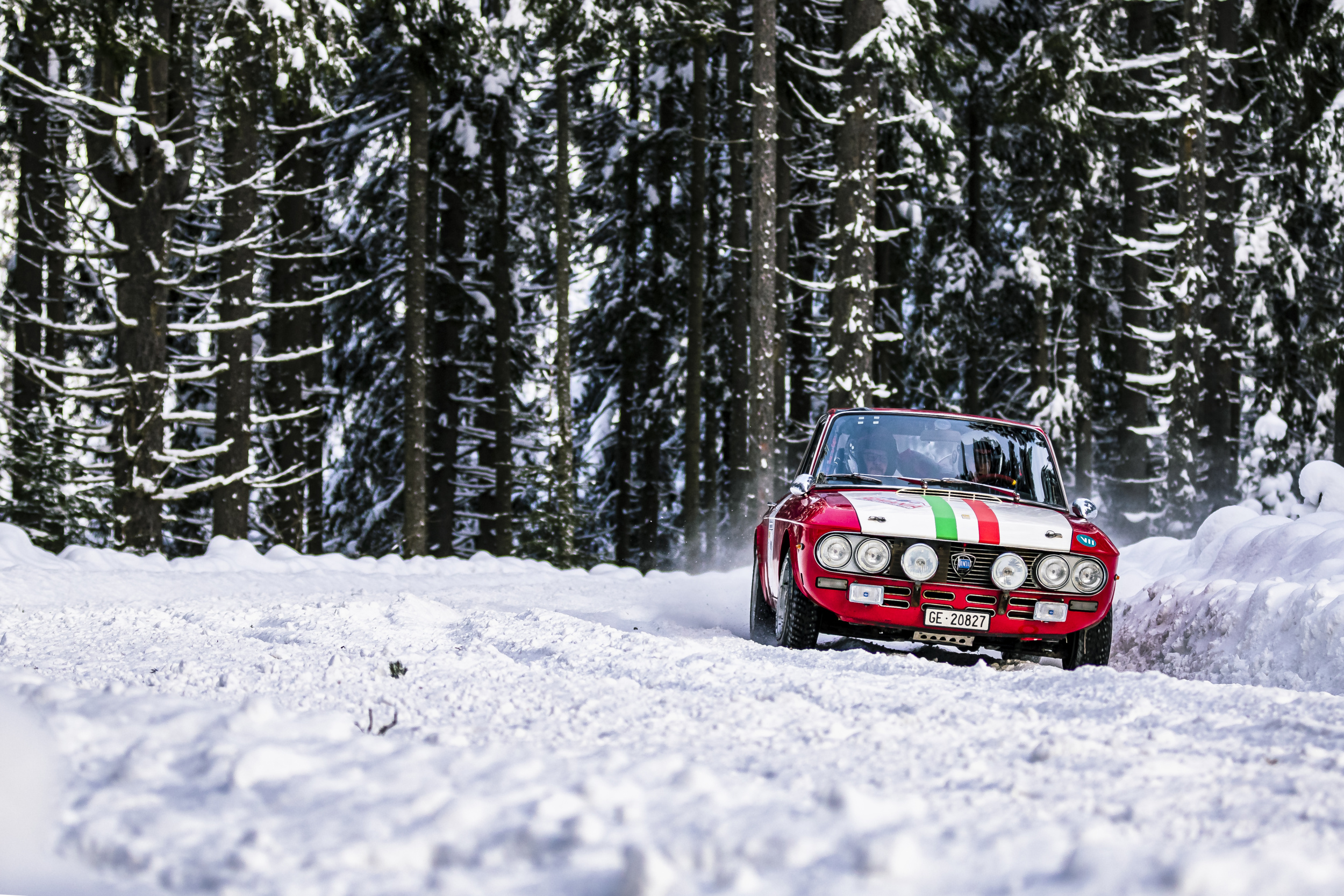
‘Lancia Fulvia’ by ATTILA SZABO
Long-distance ice skating...
It is particularly popular in the Netherlands. The Elfstedentocht race is well known: a historic long-distance speed skating event spanning almost 200 km. Taking place in the northern province of Friesland, it passes through all eleven of the province's historic cities. The race takes place once a year at most, but only if the natural ice along the entire route is at least 15 centimetres thick.
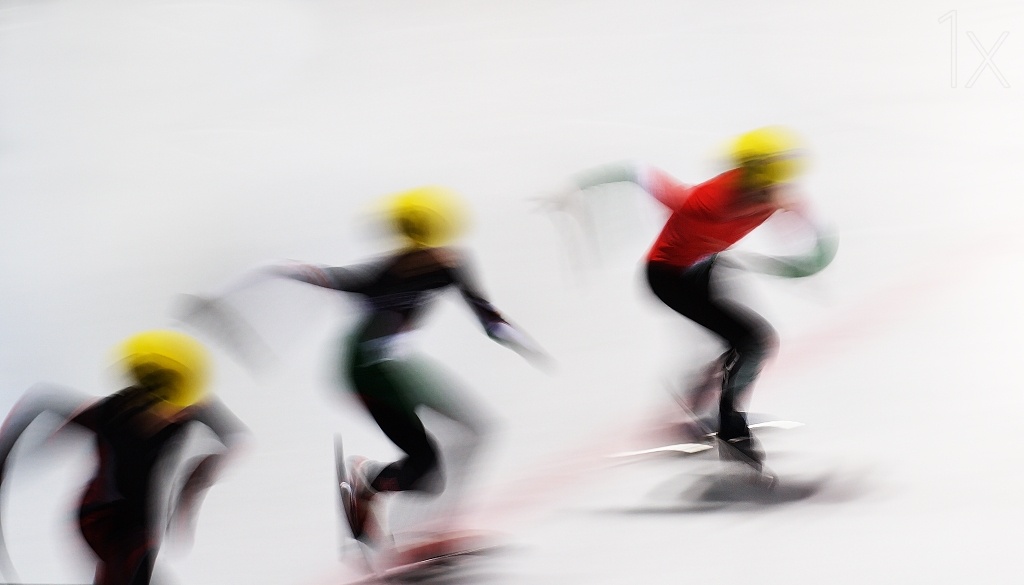
‘Dance of the long knives’ by Dusan Ignac
Winter cross-country cycling races…
… require adapted riding techniques and route planning. This includes reducing speed, braking and steering carefully when cornering, and choosing paths without large amounts of snow or ice. There are two types of winter cross-country cycling race: cyclocross, which takes place during the cold season and involves riding modified road bikes over obstacles such as mud and sand; and alternative winter cycling races. Alternatively, winter cycling races may be held.
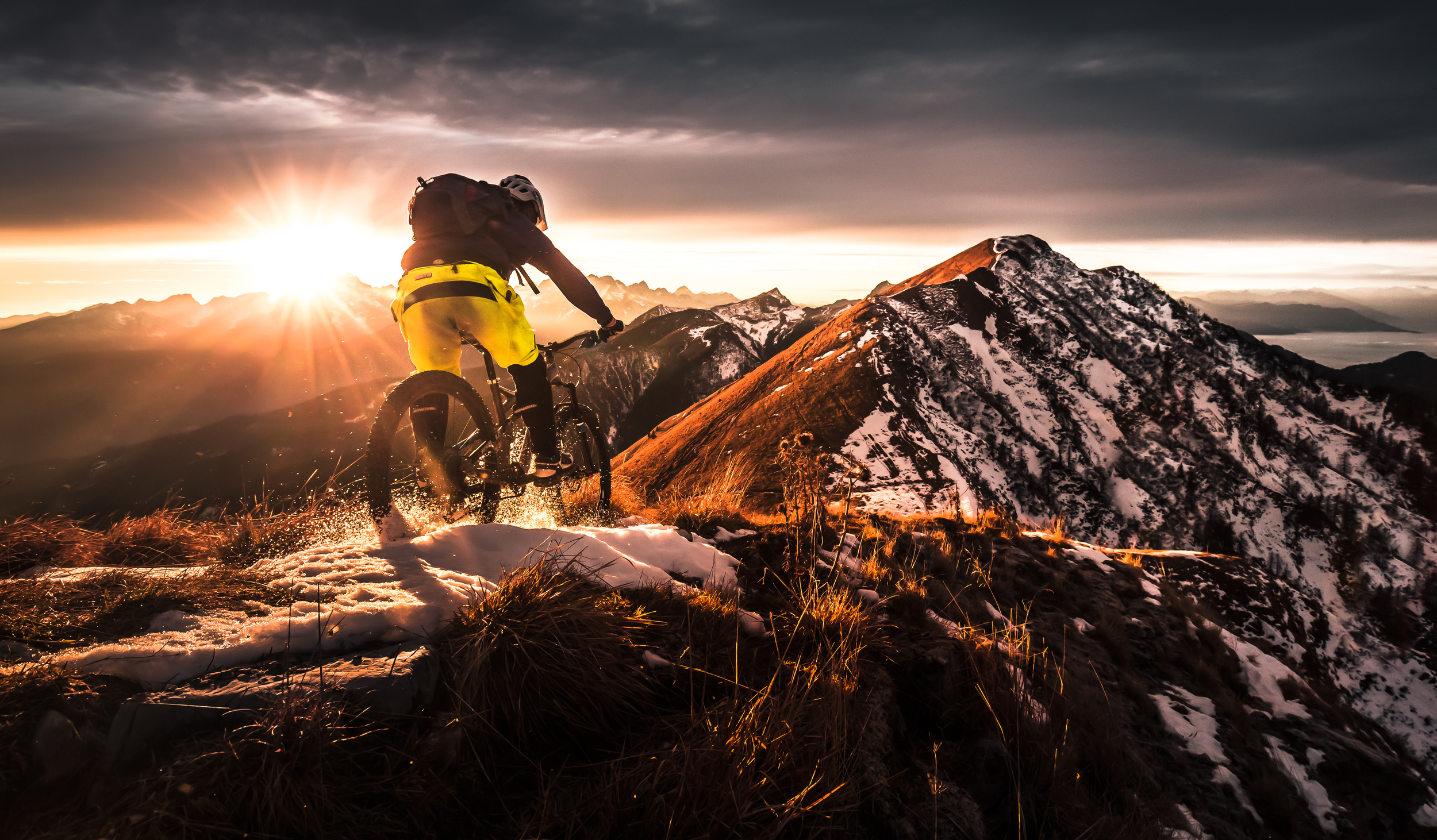
‘Take a Ride on the Sunny side’ by Sandi Bertoncelj
Winter sailing regattas...
… examples include the Frostbite Winter Race Series in Jersey and the J/70 Winter Series in Turkey, as well as various other regattas held in locations such as the United States, Italy and Spain. Iceboat racing, a unique form of winter sailing, takes place on frozen lakes when conditions are suitable. The Royal Channel Islands Yacht Club's winter sailing race series in St. Aubin's Bay, Jersey, is also very popular, combining Sunday morning racing with social gatherings at the club.
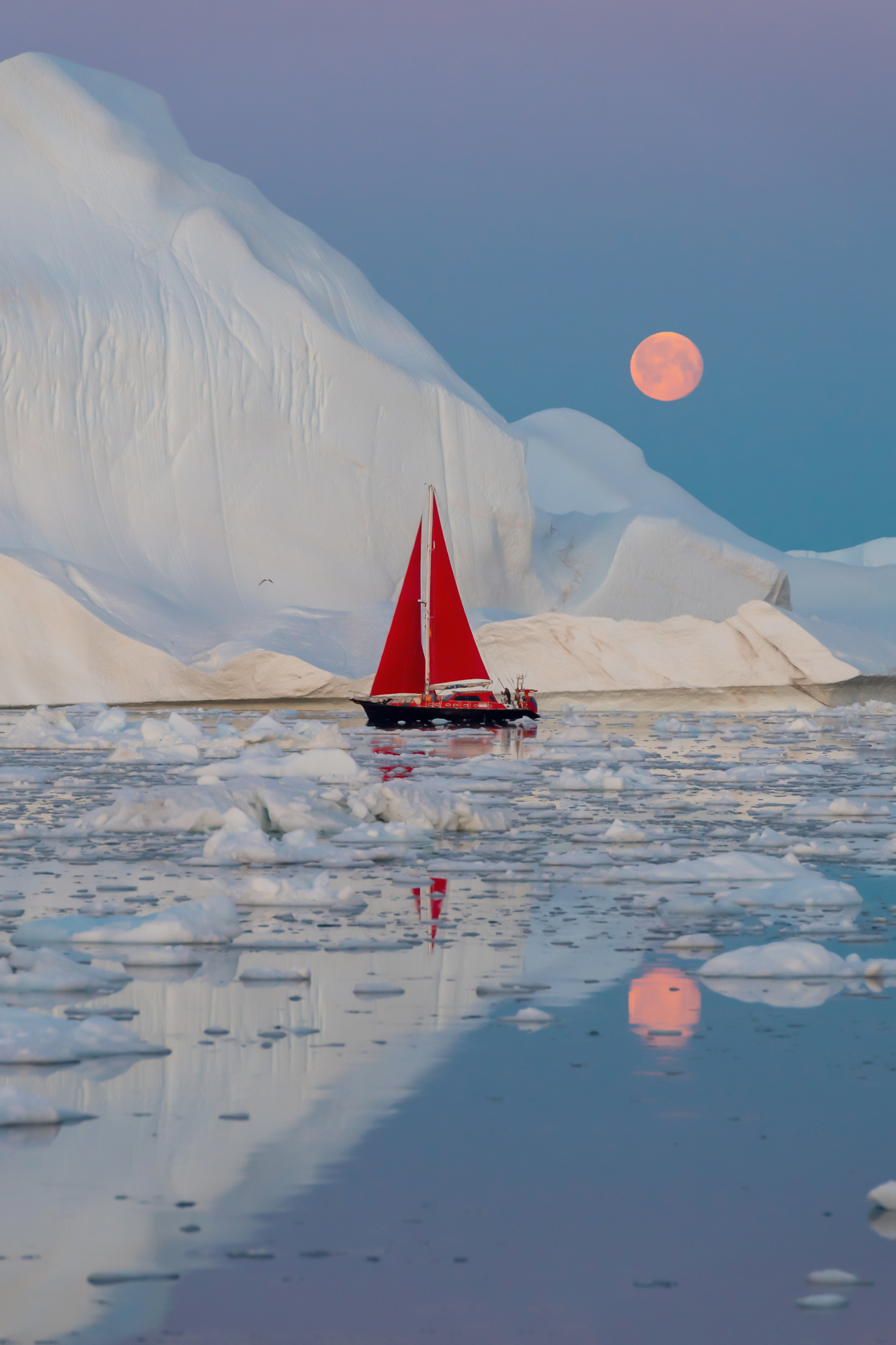
‘Greenland night’ by Marc Pelissier
SELECTED NON-OLYMPIC INDOOR SPORTS
Bowling...
… although it is not an Olympic sport, bowling is one of the most popular sports in the Special Olympics.

‘Bowling girl’ by Igor Makarov
Snooker and billiards…
… they differ in terms of equipment and rules. Snooker is played on a larger table with smaller balls and narrower pockets, making the game more technically demanding. Additionally, the order in which the balls must be pocketed and the scoring system are fixed in snooker, unlike in other billiards variants, such as 8-ball, where the entire group of balls often must be pocketed.
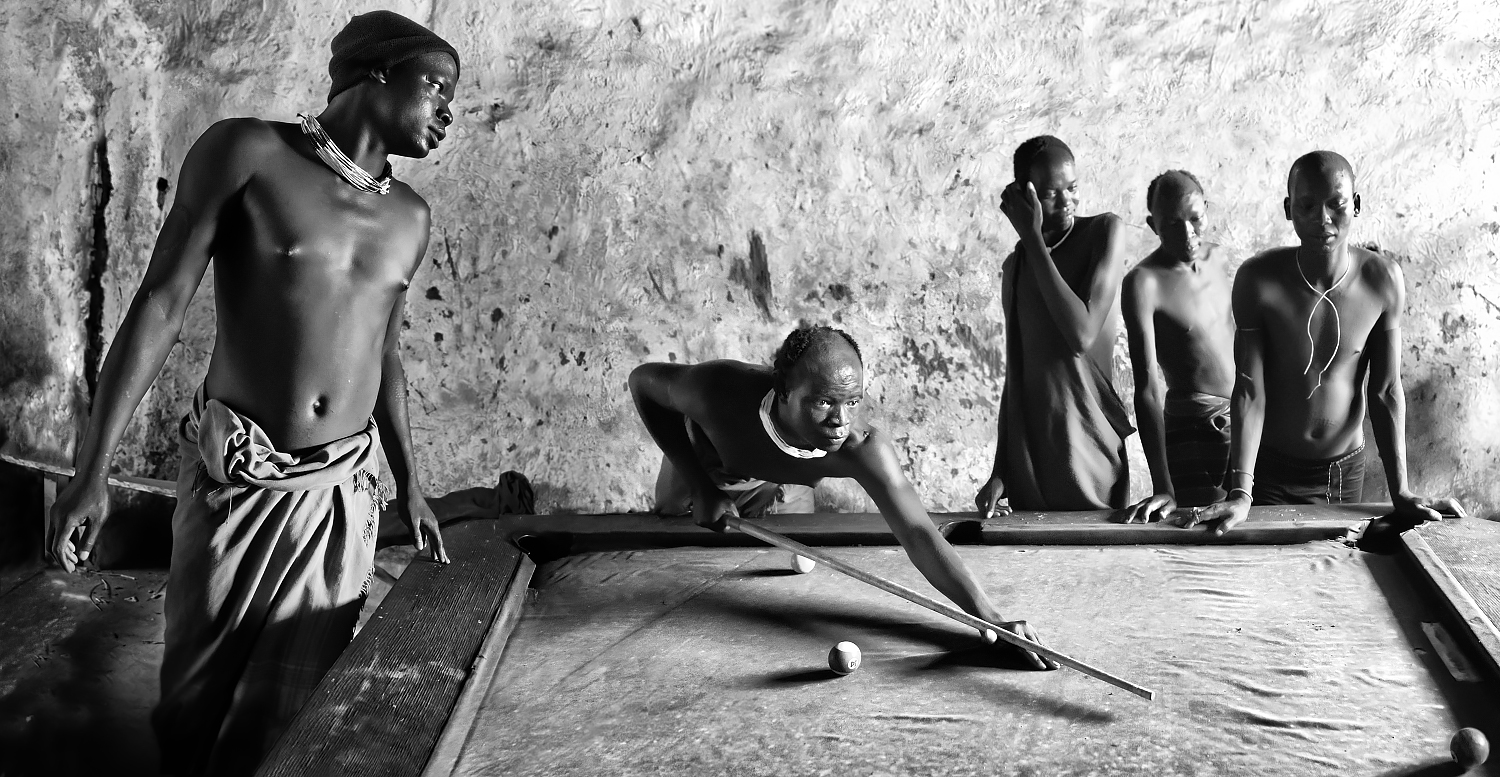
‘Billiards’ by Juan Luis Duran
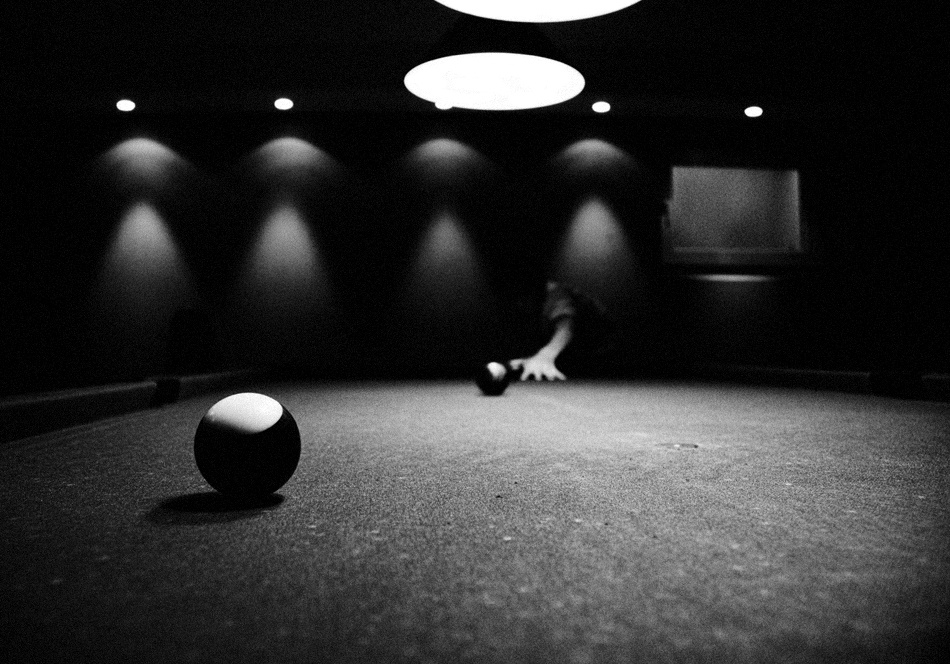
‘And all of a Sudden Everything was Calm’ by Alex OBrien
Chess…
… the International Olympic Committee has labelled it a sport and recognises FIDE as an official federation. However, chess is not approved for the Olympics. One reason for this is that chess does not involve physical exertion or athleticism in the same way as traditional Olympic sports.
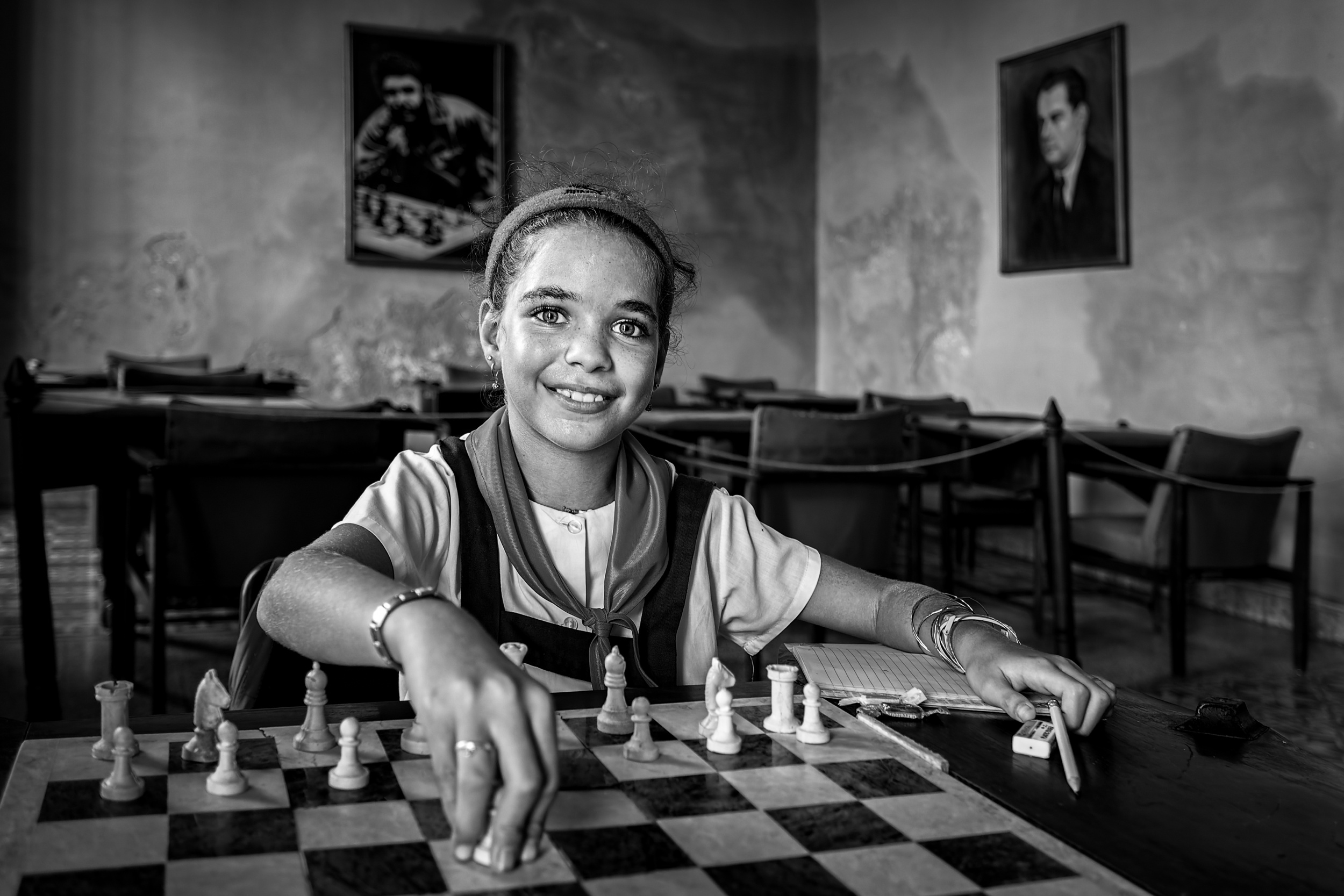
‘Chess school in Cuba’ by Santos Moreno
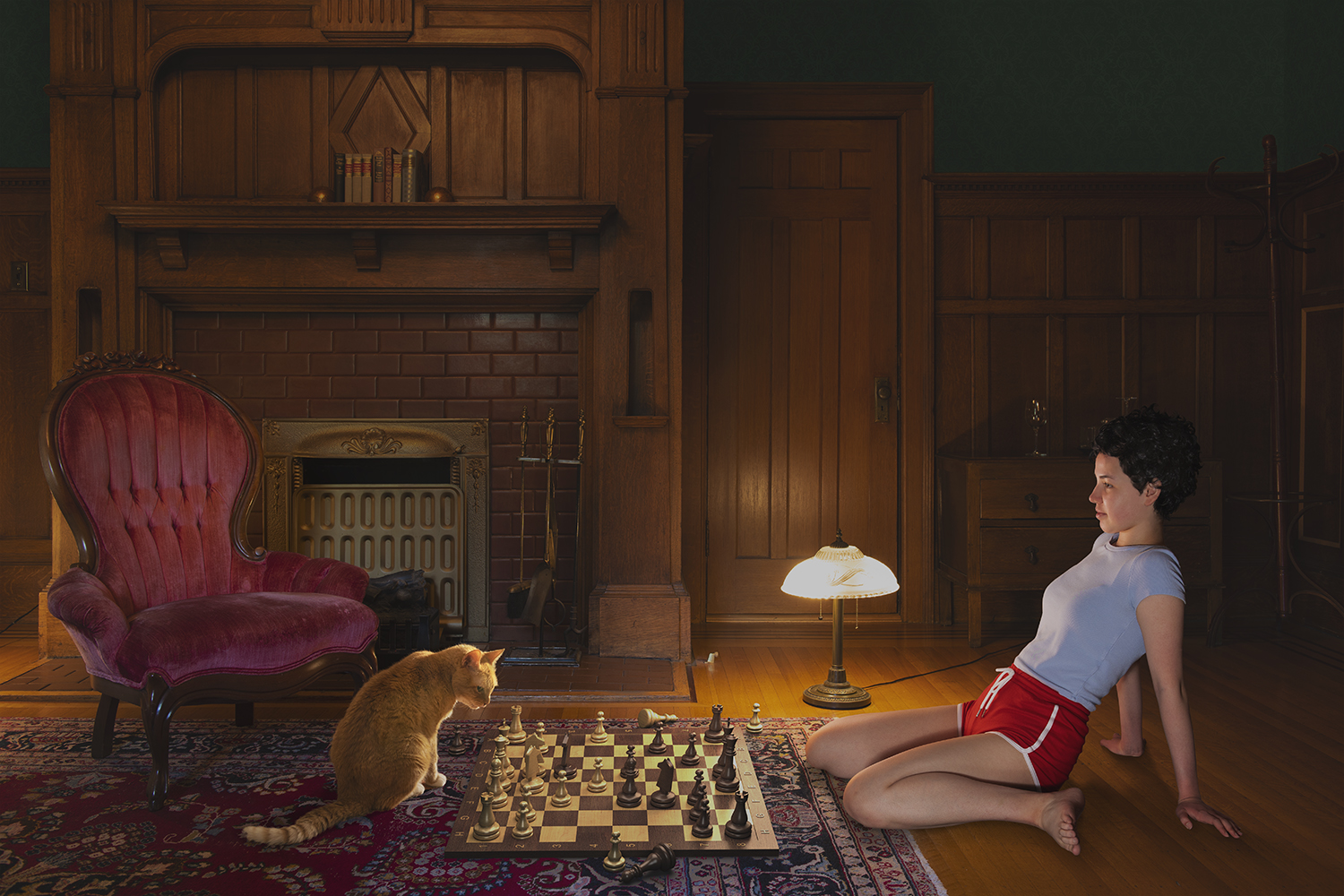
‘Chess game’ by Fang Tong
Dance sport...
... is not only an artistic activity, but also encompasses athleticism and artistry. It combines the rigour of sport with the expressiveness of art.
Dance sports include Latin American and standard dances, as well as rock 'n' roll, boogie-woogie, jive and West Coast swing, and modern line dancing. At dance tournaments, couples compete against each other.
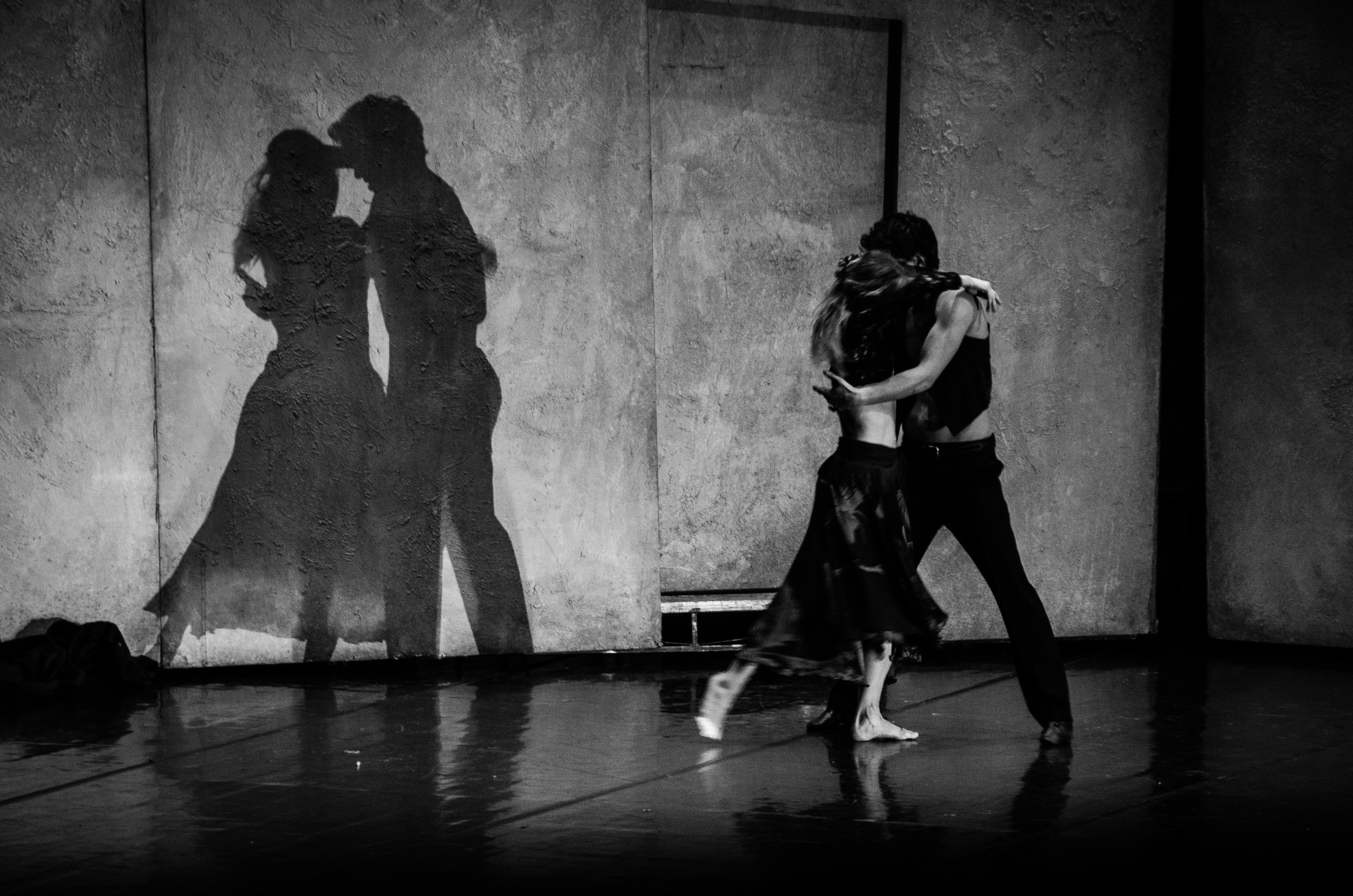
‘Carmen’ by Eleonora Abbagnato by Flavio Bertazzi
Darts...
… the first hurdle would be that it doesn't have a governing body that's recognized by the Olympics.

‘Training with heartbeat’ by Christine von Diepenbroek
Netball…
... is a team sport played on a rectangular court with raised goal rings at each end. Games are played on a rectangular court with raised goal rings at either end. The aim is to score goals from within a defined area. It is similar to basketball, but allows less physical contact between players, such as blocking and screening. Netball has stricter rules regarding physical contact; defensive players must keep a certain distance from the player with the ball.
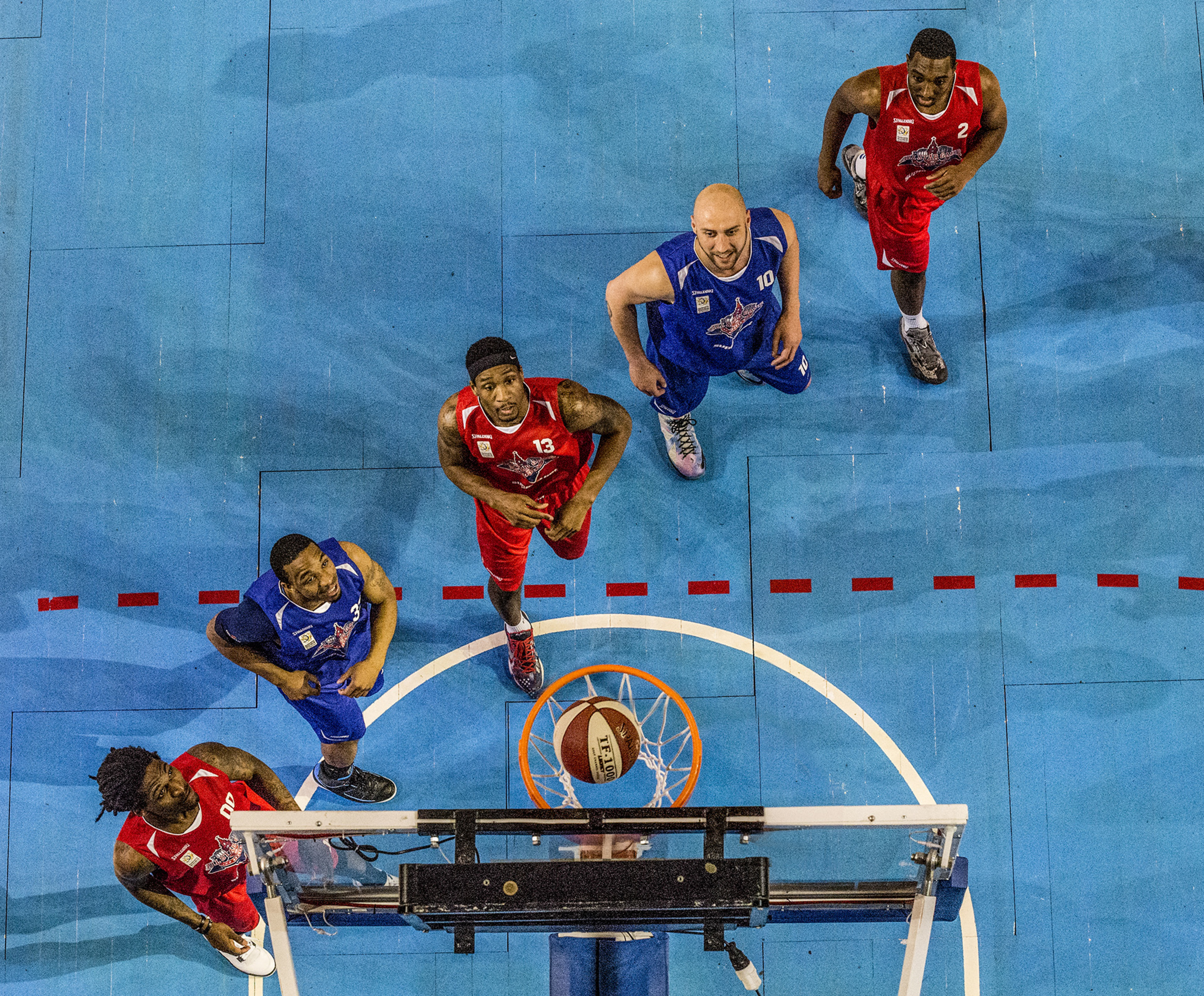
‘Line’ by Ovi D. Pop
Karate…
… is a martial art involving striking, blocking and kicking. Although it was included in the Tokyo 2020 Olympics, it is not part of the permanent Olympic programme.
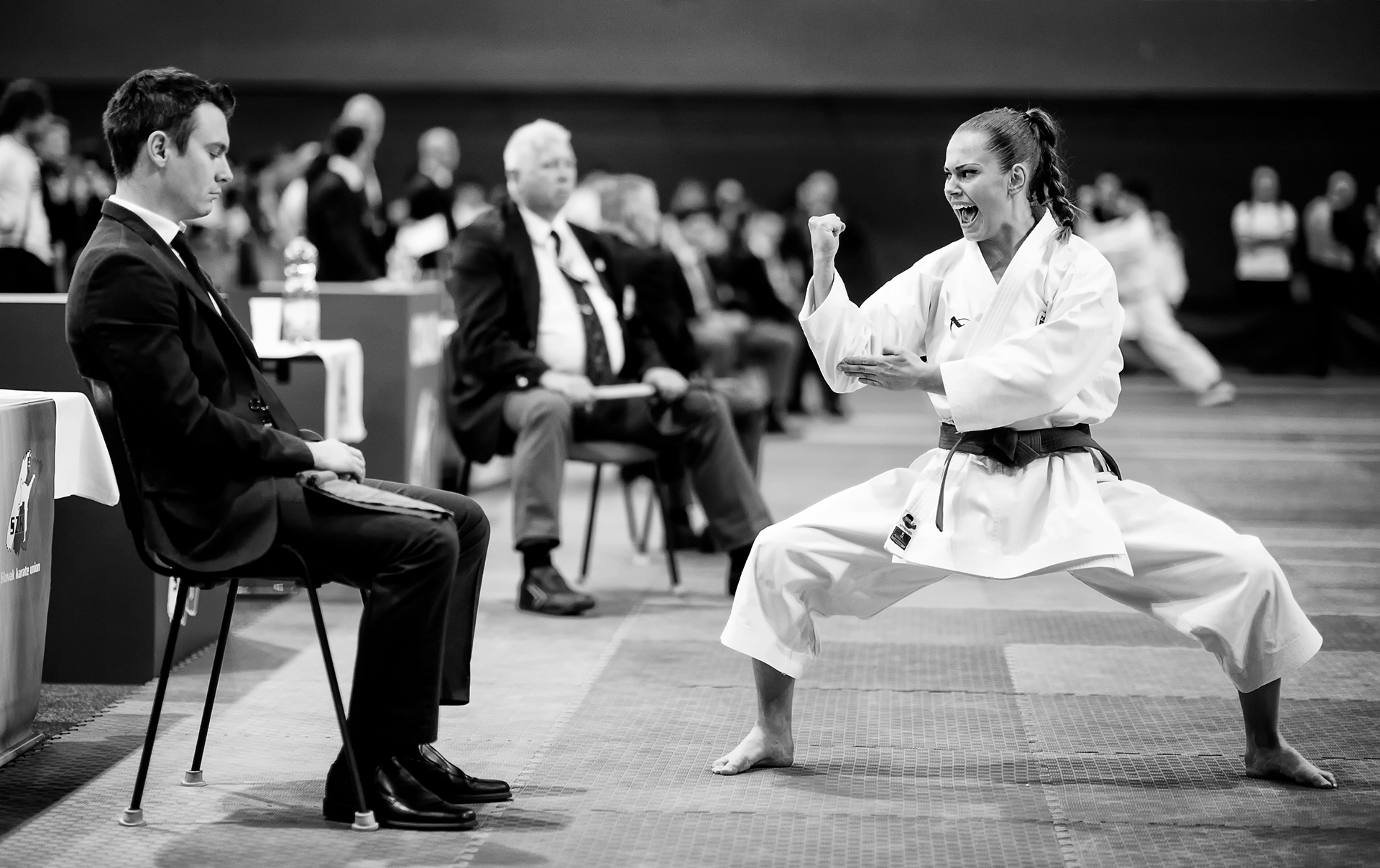
'Wake Up!!!' by Marcel Rebro
Mixed martial arts (MMA) …
... is a full-contact combat sport in which a wide variety of techniques and skills from other combat sports can be used in competition. However, the sport's violent nature and lack of a standardised scoring system have so far prevented its inclusion in the Olympics.
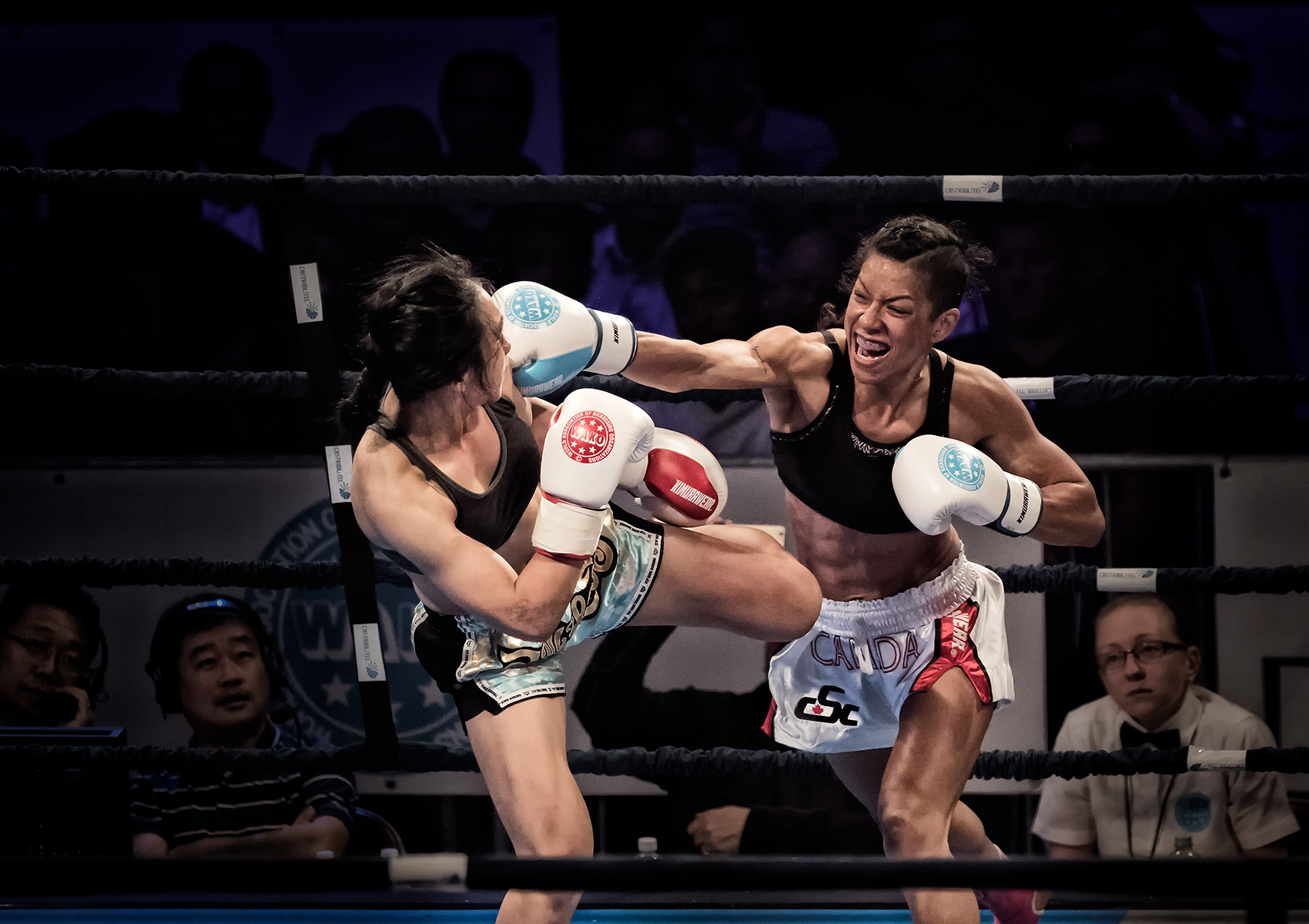
‘Fighters’ by Henry Zhao
Some other non-Olympic winter and indoor sports exist, such as bandy, ice hockey, synchronised figure skating, natural track luge, ski orienteering, snow volleyball, 3x3 ice hockey, ice climbing, rope climbing, floorball and indoor football. Unfortunately, there are no corresponding photos in the 1x photo gallery.
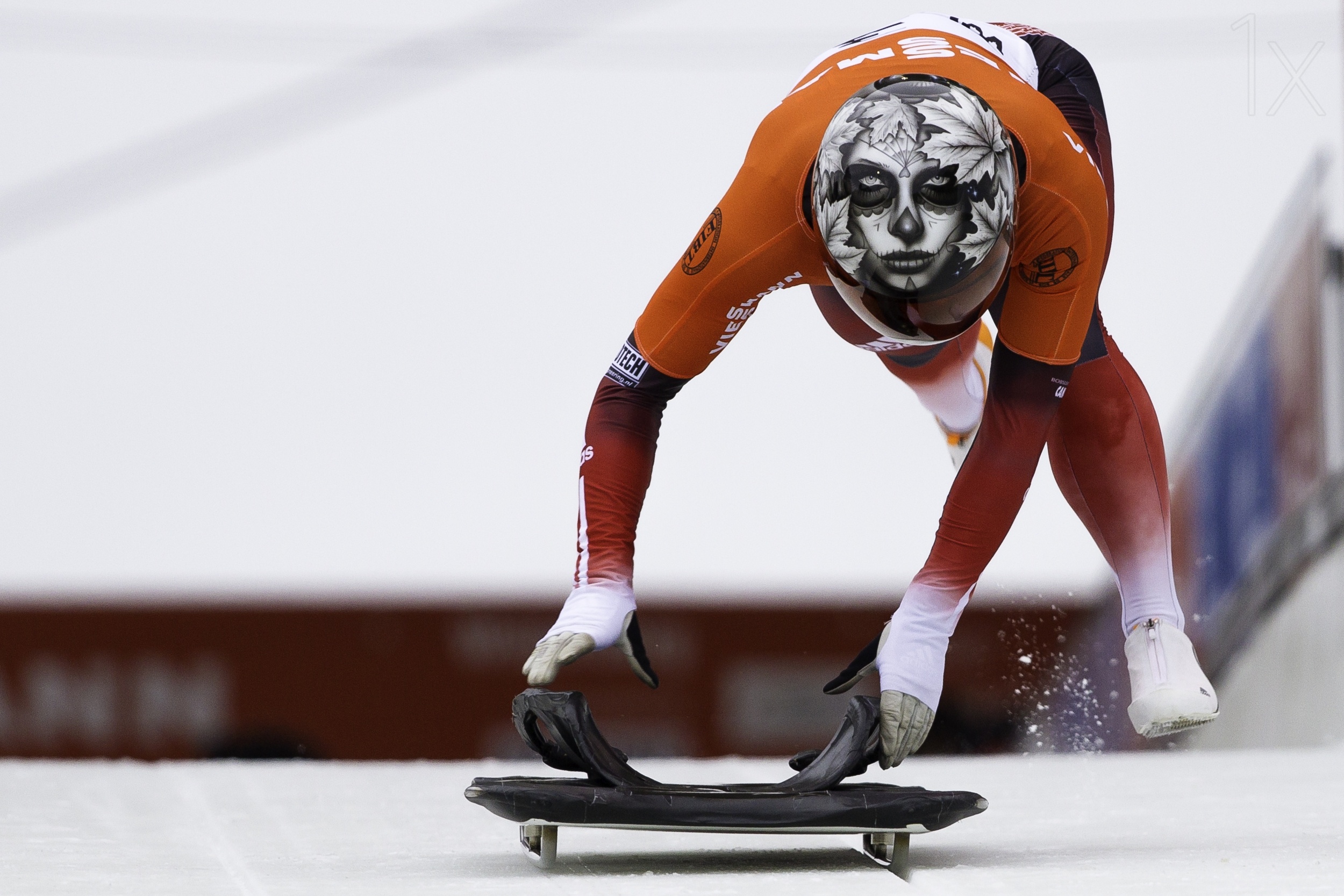
‘Skeleton face’ by Markus Hülsbusch
The final article in this series will focus on Olympic winter sports and is expected to be published in early 2026, just before the Winter Olympics begin in Milan and Cortina in February.
 | Write |
 | GAGIK VAGRAMYAN PRO Nice ,Congrats! |
 | Larry Deng APA PRO Wonderful and inspiring collection of images. Lovely and elegant article, congratulations Miro and Yvette +++ |
 | Jane Lyons CREW This is wonderful, Miro. Beautifully done! |
 | Frank Bruynseraede PRO Great series ! Thx ! |
 | Eiji Yamamoto PRO Dear Miro, thank you so much for another very interesting article with dynamic photos following the summer one! Dear Yvette, thank you so much as always! |